Update: First Round of Interviewees for Future of Money Project

Tags

Since our announcement of the Future of Money project, we’ve gotten a lot of great suggestions and enthusiasm from the community, and have already raised over $1,500 in donations! Thank you for your support! Though we’re still in the process of scheduling interviews for the video, we wanted to share the list of who we’ve confirmed so far.

Stay tuned for more updates and interviewees!

Devin Balkind is the founder of BEEx, a social fundraising platform, and The Sarapis Foundation, a nonprofit organization that supports open source projects that improve people’s capacity to create abundance for themselves and their communities.

Michel Bauwens is a theorist, researcher, and founder of the Foundation for P2P Alternatives, an organization that studies the impact of peer to peer technology and thought on society.

Fernanda Ibarra is an advocate for the creation of the new monetary systems, currently involved in the Metacurrency Project.

Continue reading

Goals for the Future of Money Project

Tags

It’s just 5 days after announcing our video project, and we’ve already raised $335 towards the cause. Thank you to all the contributors so far!

Though we didn’t define any specific fundraising goals in the first post, it makes sense to have something to aspire towards. We’ve proposed a couple targets that we think will enrich the project and result in additional resources and knowledge products for the community.

Continue on to the official site….

The Future of Money Project Begins!

Tags

image from the series Macro Economics by Kevin Dooley

Hi all!

In case you hadn’t heard, I’ve been asked to give a keynote address next month at Sibos – “the world’s premier financial services event,” held in Amsterdam. I’m planning to speak about large scale shifts in cultural values and the impact they’re having on our relationship with money, our perceptions about ourselves as humanity, and how we are redefining what ‘true wealth’ means.

The presentation is only 20 minutes long, but I’ve decided to be ambitious and create a 3-5 minute video to accompany the talk. The idea grew out of several conversations I’ve been having with Gabriel Shalom (@gabrielshalom), a video producer out of Berlin that I met via this blog. We’ve been looking for a sweet project to collaborate on, where we can amplify some disruptive memes and get people excited about the emerging trends and opportunities that are surrounding us. “The Future of Money” seemed a worthy project. 🙂

So here’s the deal:

We want to create a compelling overview of what’s going on in the world of currencies, followed by some provocative visions of where things could go. We’re going to be conducting interviews with the movers and shakers out there who are developing new business models, new frameworks, and new ideas about how we can exchange value, innovate, and empower each other. We’re going to ask some tough questions about ethics, morals, and trust. And we’re going to provide some ‘what if’ scenarios of how these things could play out over the next decade.

Help us make it happen!

In the spirit of open innovation we intend to give this video away for free when it is finished. We believe that the research and opinions we’ll collect will be of significant value to anyone concerned about their economic future – and who isn’t these days! That’s why we’re asking you to determine for yourself what degree of support you can muster to help. Even just a small amount will go a long way towards helping us cover our time and expenses on this volunteer effort. And of course it couldn’t hurt to tell your friends 😉

It is our belief that if this production is generously supported by the network it will serve as a perfect example of the kind of courageous new business models that will be increasingly commonplace as the new economy evolves.

I’ll be leaving for Berlin in just a few weeks to begin conducting interviews and putting together the video. I’m really excited to see how this evolves, and we’re open to input for interviewees and scenarios of the future!

Please follow this link to The Future of Money website we’ve created for this initiative, more info about the team, and ways to contribute to the project!

Thanks to all!

– Venessa

35+ Social Lending Platforms Around the World

Tags

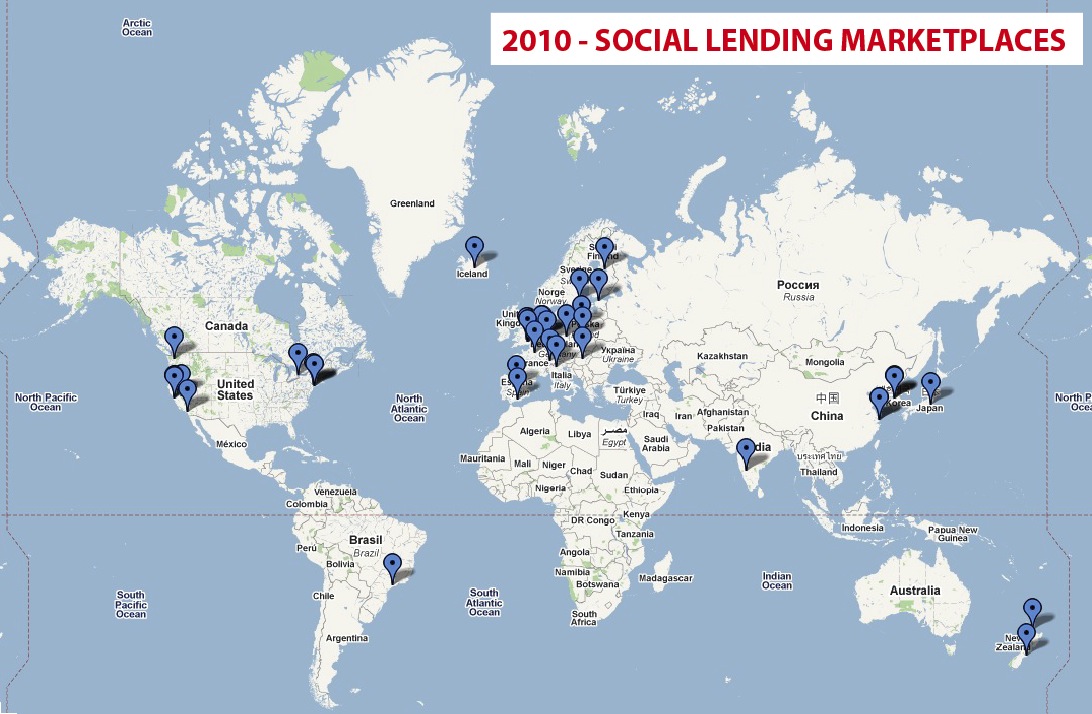
I’ll be giving a presentation on ‘the future of money’ in a few months, and am trying to wrap my head around all the emerging disruptive tools and services that are shaking up the financial industry. I plan to do a few posts covering these areas, and hope we can have some interesting discussion about what it means and where we’re going. In the meantime, here’s a general resource of social lending platforms/marketplaces across the globe. If you’re aware of any I’ve missed, please let me know! Thanks.

Social Lending

Social Lending, or peer-to-peer lending, essentially brings individuals together to lend and borrow money directly from each other, cutting out the middle man (the bank). Borrowers are able to get low cost loans, lenders are able to get great returns while helping their fellow man, and both parties win. Continue reading

Conceptual Framework for Online Identity Roles

Tags

,

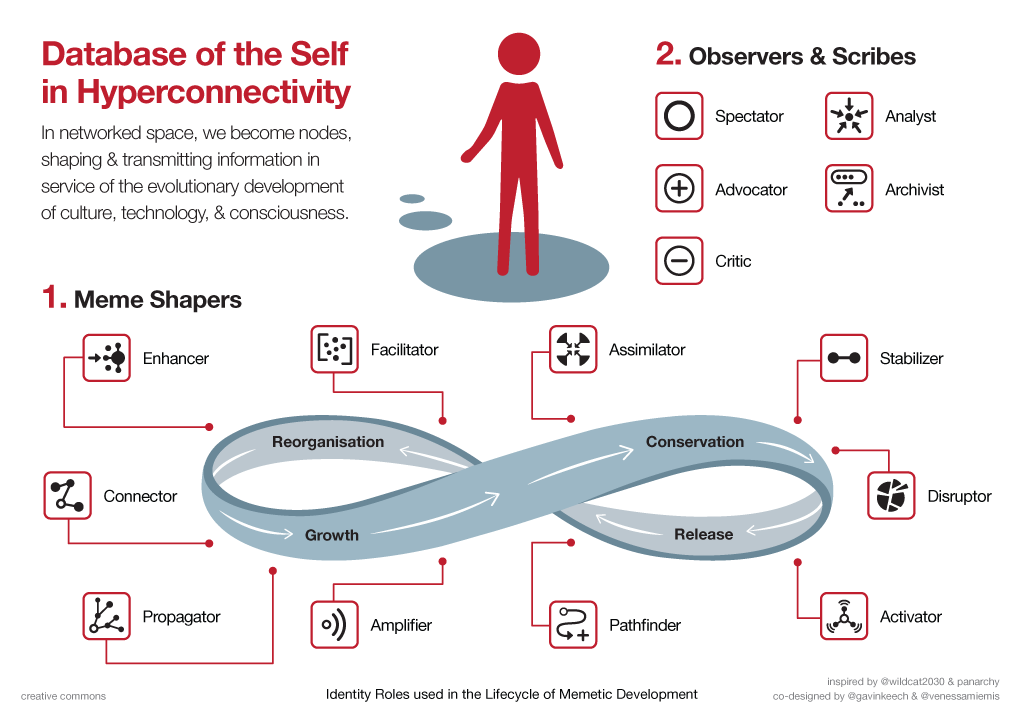
I just wrapped up a final project for an aesthetics course this semester, the assignment being to create a “Database of the Self.” I chose to make the database as a representation of the roles we play in terms of how we interact with information online. The roles are overlaid on a panarchy, which shows a visualization of adaptive lifecycles. Though the evolution of every idea or meme won’t necessarily follow this specific path, (it may in fact be rhizomatic, with multiple feedback loops), this begins to flesh out what we become as nodes within an enmeshed series of networks. Continue reading

Essential Skills for 21st Century Survival: Part 5: Conscious Awareness

Tags

This is part 5 in a 12 part series.

:: conscious awareness ::

A recent article in the New York Times, Building One Big Brain,  prompted me to write up the next skill in this 12 part series. The piece quotes Nicholas Carr’s opinions about how the Internet is reducing the “capacity for concentration and contemplation,” scattering our attention and reducing our ability to focus.

It goes on to posit that “technology is weaving humans into electronic webs that resemble big brains.” (It’s nice to see this concept going mainstream… we talked about that idea here last November in the ‘Twitter’s Intelligent, Welcome to Web 3.0” post ). The next stage in the line of thinking is that this process is part of our species evolution:

Could it be that, in some sense, the point of evolution – both the biological evolution that created an intelligent species and the technological evolution that a sufficiently intelligent species is bound to unleash – has been to create these social brains, and maybe even to weave them into a giant, loosely organized planetary brain? Kind of in the way that the point of the maturation of an organism is to create an adult organism? Continue reading

What are the Emerging Values & Business Models of the 21st Century Human/Organization?

Tags

Juliet Schor: Plenitude from toddboyle on Vimeo.

I just watched a talk by economist Juliet Schor, Plenitude: Building a Post-Work Society with Resilient Community Technologies, with some interesting thoughts about where things are and where they’re going. An overview:

There are a number of drivers and trends that are shaping the direction society and business is going – global recession, jobs created offshore, labor displacing technologies, and growing environmental costs that our economy is going to have to pay (scarcities of energy, erosion of ecosystems). Duration of unemployment is rising, and we haven’t created a solution. (In order to just get employment rates to pre-crash levels, we would need about 500,000 jobs created a month for 21 MONTHS.)

She asks:

“Can we continue with a “business as usual” economy driven by fossil fuels, consumerism, and a “hands off” attitude to market outcomes, or do we need another way?”

She posits the corporate sector is not the engine for wealth creation that is needed, but rather we need to create economic structures that are mindful of both wealth AND well-being – a new economy needs to create TRUE WEALTH, that actually improves lives and avoids top-down elistist solutions.

How? Continue reading

Guidelines for Group Collaboration and Emergence

Tags

I’m in the middle of taking a course on Virtual Learning Environments (syllabus here), and reading a few chapters from Adaptive Software Development by Highsmith. It approaches the team-building and collaboration process from the perspective of complex adaptive systems theory, and contains some interesting insights in evolutionary development and creating environments where emergence can occur. I’ve created a summary of a chapter that I’d like to share, as I think it can be valuable for many of us, and specifically for the community of practitioners around the junto concept.

Collaboration is an act of shared creation or discovery. (schrage89) Continue reading

Junto: overview of concept, philosophy, and components

Tags

,

Hi all! In the past few months, there has been a lot of excitement and momentum building around the Junto concept, which has been great, and expanded all of our views of where it could go. I just wanted to take the time to reclarify the philosophy, definition, and components of Junto, so that we know what steps can be carried out to bring the vision closer to a reality. Thanks again for everyone’s involvement in this collective learning and building process! Continue reading

Essential Skills for 21st Century Survival: Part 4: Foresight

Tags

Add to FacebookAdd to DiggAdd to Del.icio.usAdd to StumbleuponAdd to RedditAdd to BlinklistAdd to TwitterAdd to TechnoratiAdd to Yahoo BuzzAdd to Newsvine

[This is part 4 in a 12 part series. The topics covered so far are Pattern Recognition, Environmental Scanning, and Network Weaving.]

::Foresight::

The ability to develop foresight is a cornerstone for forward thinking individuals and change agents. I can say that on the personal level in my own life, when I did not have a clearly defined goal or vision of what I wanted or where I was going, I floundered. My ability to “see” potential opportunities or pitfalls was clouded, and I fell into a rut or holding pattern in life. Then, when those wild cards and “black swan events” did occur, I was completely blindsided and unprepared to handle them. I think this applies at the individual as well as the organizational level.

So what exactly is foresight? Here are a few definitions from the wikipedia page on Foresight (Futures Studies): Continue reading