Tags
This is my favorite talk I’ve given so far. No notes, no real prep… just sharing my views about the web, the co-evolution of humanity and our technologies, and where we might be taking ourselves. Continue reading
16 Friday Mar 2012
Posted in Uncategorized
Tags
This is my favorite talk I’ve given so far. No notes, no real prep… just sharing my views about the web, the co-evolution of humanity and our technologies, and where we might be taking ourselves. Continue reading
07 Wednesday Mar 2012
Posted in Uncategorized
Tags

This is a guest post by Bernd Nurnberger. The original on his blog – Community of practice and trust building
–
A few days ago I shared my crude model how we go from words to trust. I strung it along: word, definition, context, grammar, meaning, concept, understanding, salience, insight, trust, reputation. I believe each prior step must be present and perceived by both partners in an interaction before the next step gets good traction.
Being in the people business of establishing technical trust – as I am – is an interesting combination of challenges: engineering, salesmanship, diplomacy, organization and administration, combined with awareness for the needs of future users of what we test and certify, and the needs and expectations of society.
Seeking a competitive edge in this usually means working without a model, or just making one up and test it, see what sticks and build on that. We might see whether we get closer to the goal. That matters. Insight into what’s best comes with routine, where do we have that at the edge?
Trust is a non-negotiable essential in business. (via ingenesist blog) So, being in business is basically about trust. Establishing and verifying trust, documenting it, so it can be shared, swiflty, without every business partner having to redo what led to the trust.
To me, competitive edge is all about faster, yet secure trust building, towards more intense knowledge flows and learning from each other.

Out of self-preservation our minds are programmed to scan for suspicious signs to prevent having our trust betrayed, and if it happens, we almost automatically score the loss of trust. If it is about a product or an organization, we may drop it. If it is about people, we may react with deep emotion.
Losing trust is much faster than building it, which could be a reason for feeling that trust is eroding everywhere. What if this is a cognitive bias? What can we do to accelerate trust-building?
Image credit: Map of Online Communities , (CC) by D’Arcy Norman
–
 German by birth, graduated electronics engineer, B2B salesman for electronic measurement equipment, some design and programming experience, product safety inspector, management system auditor, department builder, coach, seminar lecturer, collaborative learner.
follow Bernd on twitter @CoCreatr
27 Monday Feb 2012
Posted in Uncategorized
Tags

.
It feels like there’s a lot going on right now.
I’m consciously pushing myself to be better, trying out different ways of doing and being, existing much of the time outside my comfort zone, feeling afraid of failure or just plain confused.
I’m finally learning the importance now of self-care as I try to learn and grow. (thank you to all my friends who remind me of this constantly).
The week before last was super emotionally turbulent, and I felt like I was in a transformation period. I could *feel* old habits and ways of thinking and believing slowly loosening and dislodging themselves from my psyche. I felt like I was getting ready to step into something new, to sprout wings, and have a new stage of experimentation ahead.
I wanted help and guidance, and so turned to one of my healers, Eileen O’Hare. Eileen is trained in a lineage of Andean Peruvian shamanism, and uses various indigenous techniques (inquiry, dialogue, song, art, visualization) to aid people in their personal growth and healing. I went to her last Sunday for a session. It was supposed to last about an hour and a half, but we ended up going for nearly 4 hours. It was a powerful experience I’d like to share, with the intention that it inspires a path to healing or self-inquiry for you. Continue reading
24 Friday Feb 2012
Posted in Uncategorized
Tags

I recently had an email exchange with a colleague, who was sharing his frustrations about “following one’s passion.” It seems he’s looking critically inward at the alignment between his drives and motivations, and checking that against the reality of his actions.
Is change being made, or just spoken about?
He acknowledges the comfort of his siutation, which enables him to not have to act, but seems to be coming to a place where he chooses to act anyway. It may be more scary than philosophizing from the sidelines, but it means a direct experience of life.
I’ve been going through a similar thought/emotional process myself, and could relate to what I interpret as feelings of hypocrisy. The raising of self-awareness has been forcing me to ask myself continuously if I’m practicing what I preach, and realizing that if/when the answer is no, I’m best to just keep my mouth shut.
I was touched by this friend’s courage to face his own truth, and what appears to be a coming to terms with choosing what to *do* and not just what to say.
Below is his reflection, posted with permission. Continue reading
21 Tuesday Feb 2012
Posted in Uncategorized
Tags

It would seem that if one wants to engage in real transformation in the world, a shift has to take place, which is expressed through culture, but begins within.
Here’s an experiential exercise you can try, to simulate how I see it:
First, take your index finger, and point it away from you, and out into the world.
This is what all of us are familiar with doing, in some way. It’s identifying all the problems out there that need fixing. And there are many, many things, aren’t there? If only people would listen, things would finally change.
This is life from the bleachers.
Now, slowly redirect your index finger to point towards yourself, and bring it in until it’s touching the center of your chest. Perhaps you say out loud, “I AM.”
This is life on the field.
This is what world builders are doing. Continue reading
17 Friday Feb 2012
Posted in Uncategorized
Tags
The course was facilitated by an amazing couple, Jim and Michele McCarthy, authors of the book Software For Your Head.
My Takeaways
The outcome of the past two days is that my focus has been sharpened and honed on some critical components for forming extraordinary teams that can SHIP, scaling, and ultimately impacting epic cultural transformation.
The learning community in which I participate has actually been noodling over this inquiry for several months now, framed something like:
If we were to form a ‘next-gen Agency’ that utilizes swarm intelligence to build solutions, what is the most rapid and elegant way to:
1. Form a team.
2. Envision a product.
3. Agree on how it would be made.
4. Design and build it.
Turns out this is the exact simulation we ran through at BootCamp. Continue reading
17 Friday Feb 2012
Posted in Uncategorized
Tags

I had the pleasure of spending time yesterday with Eric Harris-Braun & Arthur Brock of the Metacurrency Project, sharing thoughts about the federation of tribes we are forming, and the principles upon which this type of living systems organization should be founded. Eric shared this excerpt from the book Sanctuary For All Life by Jim Corbett, which felt powerful and true to me. I’d love to hear your perspective:
“A socialist collective and a capitalist corporation have the same organizational form, whatever the difference in their goals. Comrades, workers, and shareholders subordinate some of their rights of self-determination to a managerial command that unites them into a collective force for achieving an objective. Military mobilization is the historical taproot and conceptual paradigm for this kind of goal-directed solidarity.
This is a particularly effective way to overcome enemies, competitors, and other obstacles, whatever the means and regardless of side-effects. It is the way to defeat the Nazis, put a man on the moon, or mobilize a government-industrial complex that can compete globally. However, for human society to flourish as an association of cocreators, a common cause can’t replace a common ground of rights and responsibilities – not even when the corporate body’s directors are chosen democratically. A collectivity of comrades who serve a good cause fails to substitute for a society of friends who are free partners under no command.”
——
more excerpts from the book via eric’s blog
13 Monday Feb 2012
Posted in Uncategorized
Tags
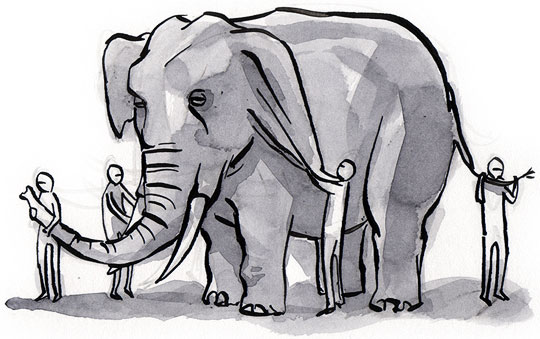
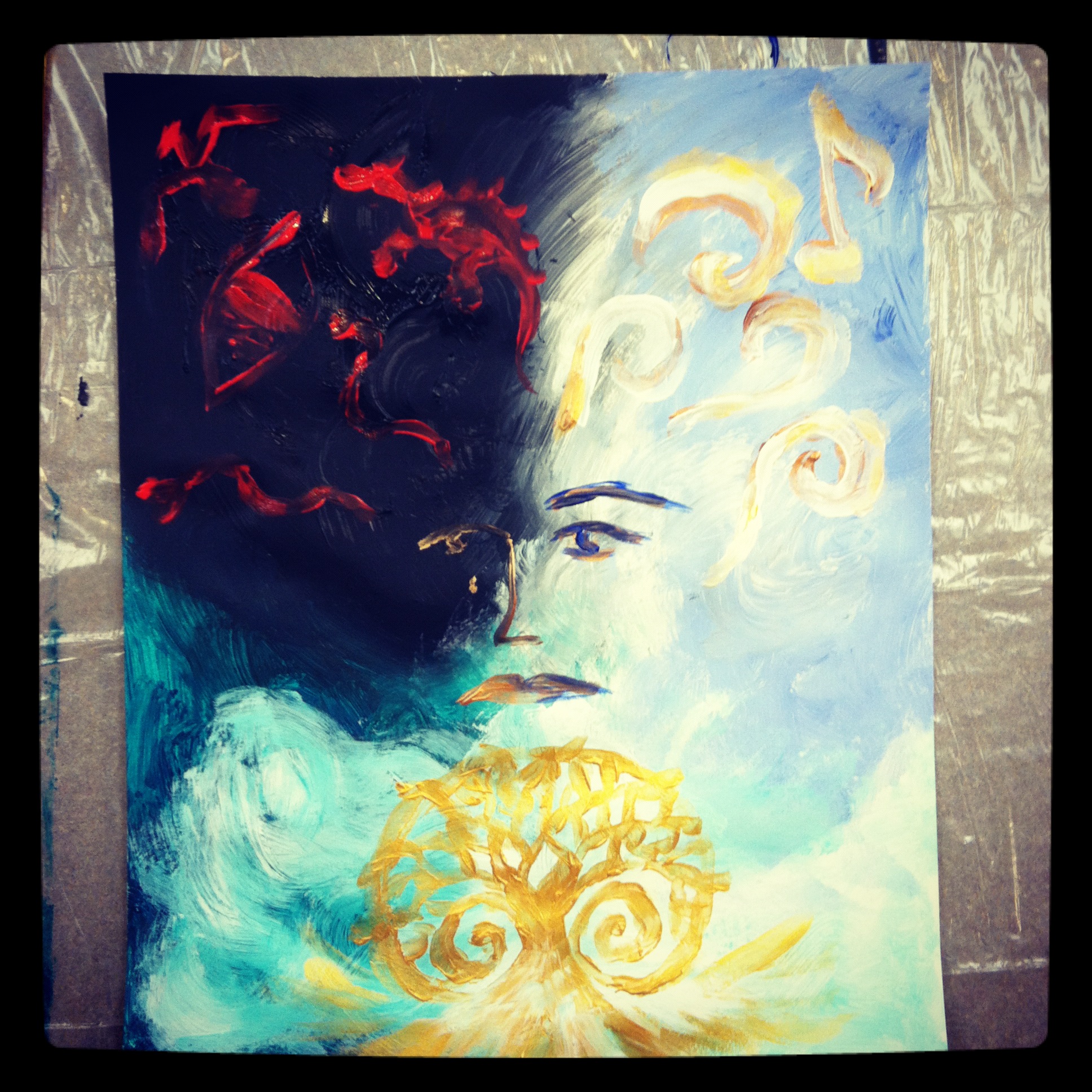
It’s running a real-time simulation of the world 24/7, creating stories, scenarios, predictions of what could happen next and how a situation might play out. We run a cost/benefit analysis of the range of choices we could make, and then make decisions based on what we think will lead to our preferred outcomes.
This mind of ours is both a blessing and a curse.
On the one hand, an open, creative and imaginative mind has the capacity to envision futures that at first glance seem impossible or absurd, but on second glance make you go “hmmmmm.” On the other, our minds are fantastic of filling us with fears, envisioning scenarios of what could go wrong, and ultimately paralyzing us from taking any action at all.
It’s easy to get trapped in our most comfortable assumptions and models. It feels safe and familiar in there, where the territory is predictable and we have reference points for understanding situations likely to be confronted in ‘the real world.’
The bad news is, we’re in transition. The world is changing. Things are moving, shifting, adapting, at an accelerating rate. Comfortable and familiar mental models may feel safe, but pretty much leave us with our pants down when a new system or paradigm emerges that reframes “how things work.”
You’ll wonder why you didn’t see it coming.
The good news is, the mind is plastic, flexible and pliable. We ARE capable of expanding our thought architecture to accommodate the imagining of new models and “crazy ideas” that actually just might work.
The ecosystem around is alive and buzzing right now, ripe for an explosion of innovations and shifts that will transform how things function at a multitude of levels.
Who’s going to harness the opportunities first? And how is it done?
I decided to touch base with my colleague Frank Spencer, founder of the foresight and design consultancy, Kedge. I asked him to share his views on which futures thinking “suites” he’s found to be the most useful for C-Suite leaders committed to expanding their mental horizons in order to pioneer new ground.
Below are 4 he believes should be in every leader’s toolbox:

:: Internal Inquiry Suite ::
The Futures Thinking tools in this group not only give an individual or organization a glimpse into how they think about the future, but also help in getting past assumptions and biases so that they are open to alternative outcomes, potential risks, and hidden opportunities.
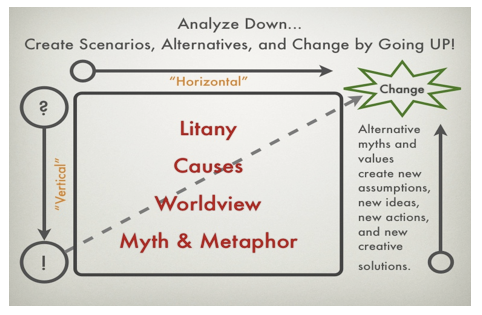
The star of this set is known as Causal Layered Analysis (CLA), a method for digging beneath the obvious facts and events that we all see on the “surface” of everyday life.
Layer 1 – THE “FACTS” (official unquestioned view of reality)
CLA begins by having the user write down the facts around an issue (ex. “The Stop Online Piracy Act [SOPA] seeks to put an end to the illegal activity surrounding the intellectual property of the entertainment industry by online file-sharing sites”.) This factual information (the first layer of CLA known as the “litany”) is then analyzed through 3 more layers, each addressing a deeper level of internal meaning that caused the litany to be constructed in its present state.
Layer 2 – THE “SYSTEM’ (social system/structure informing ‘reality’)
The level at which the user uncovers the structures and actors that are causing the litany to appear on the “surface” in its present form.
(ex. “The entertainment industry has a monetary interest in protecting their IP from piracy. The present system is set up in such a way that entertainers create a product or IP, and sell to consumers through various means of delivery such as CDs/DVDs or digital downloads via online stores such as iTunes. The internet creates a huge disruptor to this model, and government legislation is the means to police and protect the present global economic model.)
Layer 3 – THE “WORLDVIEW” (deeper unconsciously held assumptions)
The “worldview” that is creating this present systemic approach.
(ex. Government intervention is needed across sectors and domains in order to assure economic protection. Government and industry must partner in order to assure global growth and stability. 2-way monetary exchange of goods is the only means to job development and economic growth. Big government is good.)
Layer 4 – THE “MYTH & METAPHOR” (unconscious emotional narratives about reality)
The “myth and metaphor” layer that reveals the deep ideas that an individual or culture holds that are giving birth to any singular worldview. This level can be expressed in statements, pictures, imagery, or any other means that helps to unveil the deeper cosmology of the user.
(ex. Tribalism, scarcity, and fear are universal motivators of human activity. “Might makes right.” Power is the chief means to social change. The great law-giver. etc.)
With this model in mind, a CLA map might look something like this:

:: Environmental Impact Suite ::
Headlining this suite is a method called Futures Wheels, a means for envisioning the future implications of any critical issue, focal decision, or emerging trend. These implications are then used by leaders to inform strategy and action in an organization, creating a more robust and resilient outcome. Though the tool is not limited in the amount of implications that can be developed, most Futures Wheels exercises use 3 expanding levels – far enough out from the original trend or decision to get a good look at the possible risks and opportunities that could impact the organization.
Other tools in this suite include:
(image via http://cindyu.files.wordpress.com/2010/03/backcasting_allbox.png)
:: Futures Mapping Suite ::
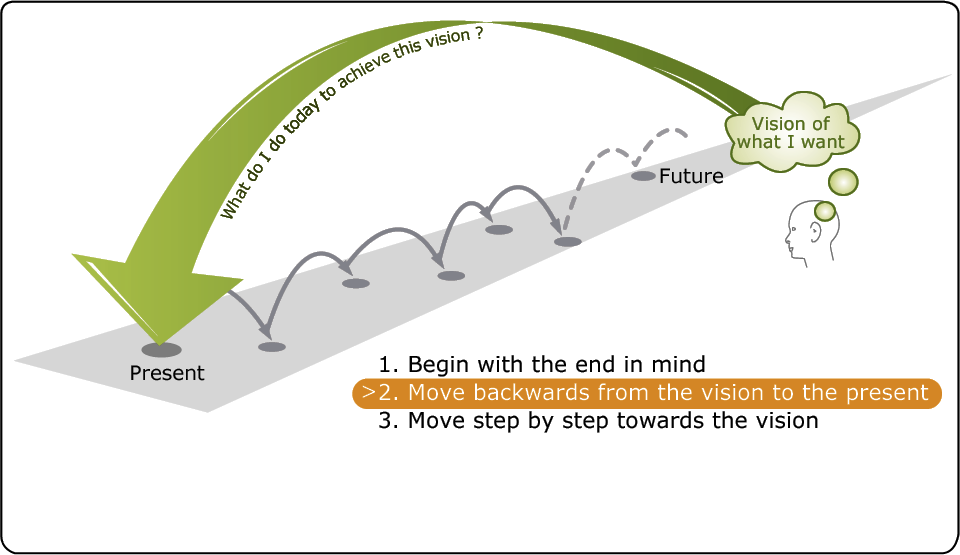
One of the more popular tools in this suite is known as Backcasting. Through this method, strategic teams can begin at a preferred or aspirational future and work backwards over time to identify specific strategies that will be needed to support that future. In this way, leaders can clearly understand not only what strategies and actions will be needed, but also the time increments in which those strategies must be implemented or obtained.
Other tools in this suite include:
(image via http://www.softwarebee.com/preview/scenario-planning-mba-19590.jpg)
:: Scenario Modeling Suite ::
One of the most popular methods associated with Futures Thinking is Scenario Planning & Development. In employing this tool, companies can understand how the future will “play out” under different emerging trends and alternative outcomes. With the well-informed stories of multiple futures in-hand, leaders can then make their strategies much more robust and adaptive, ensuring both surviving and thriving no matter which future unfolds.
Other tools in this suite include:
Now imagine these “suites” as one comprehensive learning program, each piece building on the last to help leaders across disciplines to integrate the competency of futures thinking. That’s exactly what Kedge has done in creating our Executive Futures Program, with an eye on working alongside the leaders of the 21st Century to raise the “foresight IQ” in organizational and social enterprise. This means promoting leadership that understands the necessity of viewing the future through the lens of alternatives rather than linear outcomes. This emerging breed of new thinkers knows that complexity is a birthplace for opportunity rather than an enemy to be avoided at all costs, and that a picture comprised of multiple outcomes holds the key to answering our greatest challenges.
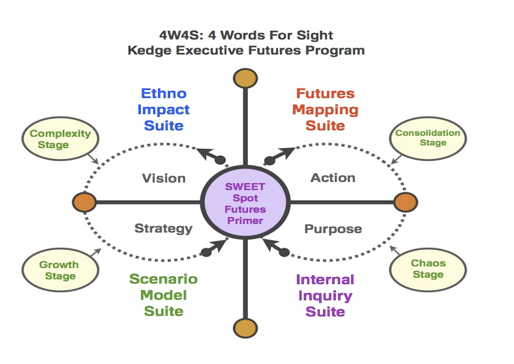
As our present landscape of volatility has many leaders scrambling to create “survival manuals,” those who are learning and employing the skill of Futures Thinking are realizing that we can operate out of an entirely different mindset – trailblazing a path into new organizational structures and ideas, new entrepreneurial ventures and social innovations, and new economic terrain that will allow us to thrive.
—-

Further Reading:
3 Reasons CIOs Need Scenario Planning
This Is Generation Flux: Meet the Pioneers of the New (and Chaotic) Frontier of Business
Foresight Education and Research Network
Acceleration Studies Foundation
World Future Society
09 Thursday Feb 2012
Posted in Uncategorized
Tags

The last few years have been spent building our networks. Getting plugged in, getting connected, and sending out probes to “find our tribes.” We are RAPIDLY finding each other now, and nodes are beginning to form as people cluster around shared intention and define new organizational dynamics of how they’d like to align and join forces.
I’m seeing people “wake up” to the realization that there is a massive amount of value to be unlocked as we shift away from old metrics of “what we value” and into new metrics for wealth and meaning. The new metrics are emergent, but clearly multidimensional and human-centered.
Here are some of the axies I see in shift:
– from scarcity to abundance
– from finite to infinite value
– from ownership to stewardship
– from transactional to relational
– information hoarding to knowledge creation
– from isolation to cocreation
– from passive consumer to active producer
These shifts are visible in many new forms, and I’m excited to be a part of the evolution. Below is a visual of exciting projects in gestation, new platforms and products under development, and adaptive chaordic organizations in formation — all of which I’m playing in.
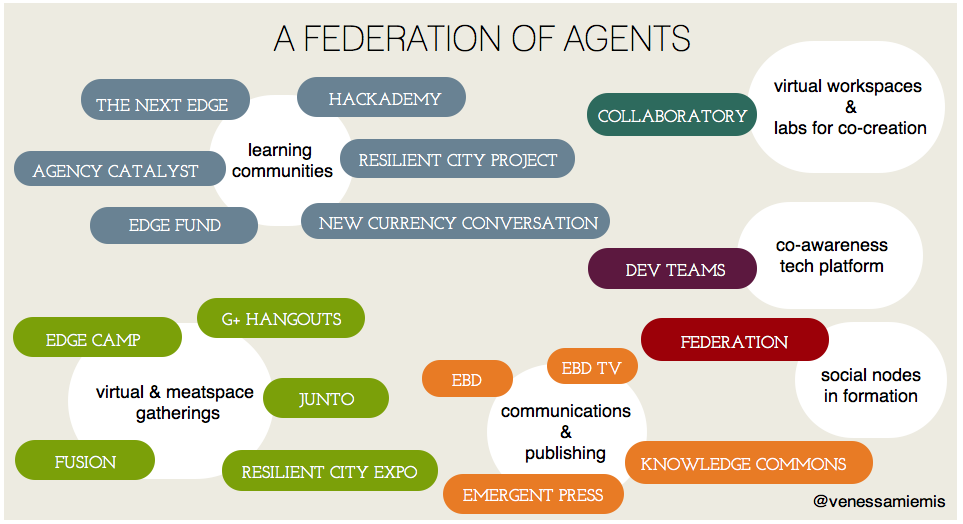
There are many swarms of similar activity taking place across the planet, with many “BuilderShips” approaching liftoff. As part of humanity’s new OS, we anticipate these nodes will become interconnected, mutually informing, and co-arising.
.
What other nodes do you see forming?
09 Thursday Feb 2012
Posted in Uncategorized
Tags

This is a guest post by Lynne Desilva-Johnson, cross-posted from her blog, The Trouble with Bartleby
——-
That is to say, I propose that we are in the process of evolving our selves, not only generationally but laterally.
Which brings us to The Big Caveat:
I am not an empirical scientist, nor is the book by any means an empirical exercise.
If there must be a title, I am a philosopher (and poet) …though I am fond of “alchemist,” as well.
While I am the first to admit that while my background includes a love of an relationship to hard science, I also wish to stress from the outset that neither I nor this book intends or suggests to offer the type of “truth” allowed for via empirical methodologies.
In fact, this study relies on the opposite: an understanding of strict empiricism as limited by our own perceptual limitations. At the same time, though, it always allows for and wishes to engage with those instances where (despite our limitations) we feel, intuit, perceive, detect, and are able to document “proof” allying with my theoretic explorations — in the lab or beyond.
The first hint in cyberspace that this project was underway was my recent call for “forward thinking evolutionary biologists or similar” which went out into the twittersphere as well at to the Next Edge and Federation/Emergence Collective groups via Facebook — a move which has already and will continue to prove essential to the evolution of the book, in ways that in fact demonstrate some of the concepts I will outline as we move forward.
That is to say — our evolution, in the way I propose (which isn’t necessarily a new phenomenon) has been accelerated to the point of visibility only via its collusion with a peak in technological/systems capabilities that have allowed our patterns of communication to begin operating at a similar speed and in similar, seemingly “chaotic” patterns — algorithms central to other organic/universal (ie, biologial, mathematical, ecological, astological) phenomena.
Not only do I have no wish to claim this book as empirically “true,” I also have no desire for a traditional, academic-intellectual-ontological “ownership” of its evolution in my own psyche. As I pull from my various inputs and experiences, the exponential bibliography of study and happenstance that has led to my being able to derive and put forth this treatise, I wish to humbly put forth that this is OUR book. I happened to have the series of personal, epistemological crises necessary for its emotional outcropping and eventual writing but I also know it to be the outcome of interactions, systems, energies, and knowledge far beyond my capacities.
Considering that I still, somehow, work two jobs totalling 50-odd hours a week (neither of which are at a computer), am doing my very best to give all I can in support of Beckett Rose and her Daddies, and co-edit a magazine launching next month, I am grateful to still have the mental acuity to write this at all! What this means, though, is that posts more frequently than monthly are unrealistic.
In the interim, of course, I will continue to seek collaborators and resources, and of course will be very grateful for any guidance towards (or offers of) funding to help me complete this project. I may, in fact, decide to Kickstart it… but I’m still very Borges-like in my fear of over-publicizing something yet so nascent beyond a controlled sphere.
What you see below is a guiding quote, from French lettrist Gabriel Pomerand, and my working Table of Contents. I hope that within a week or so I’ll be able to post another introductory blog further unpacking the essential theoretical components behind this hypothesis… please note that as these first theoretical ideas form they are not always entirely ready for deconstruction and deep dissection, and as such I may not automatically engage in theoretical debate (yet).
ONWARD!
Lynne DeSilva-Johnson
2.9.2012
_________________________________________________________
Contents May be Under Pressure
Preface: Intention and Goals, Framework, Intellectual Heritage
Introduction: “Aevolution” unpacked: theory and practice
BACKGROUND THEORY
The Science and Spirituality Dialectic:
OBSERVABLES
Cultural Output/Materia
Avant Garde/Creative Experimentation and Expression
Evolution of “Language”/Universal Communication
Channels of Practice: Tattoos, Technology, and Transcendence
– Auto-Aesthetic and Interperceptual Markmaking – Includes/not limited to Body Modification and Dress
Conclusion: AEvolutionary Manifestation and Intention: A Practical Guide


 emergent by design