How Can We Measure Currencies like Sustainability & Corporate Social Responsibility?

Tags

I came across a few cool projects today that made me wonder when we’ll have a currency for sustainability. I’ve written a bunch about how our conceptualization of “money” and “currency” is being expanded as we find new ways to measure and make transparent aspects of wealth that were previously hidden. For example, services like PeerIndex and Klout seek to measure influence, authority, trust, and how well your message resonates with an audience, hence establishing online reputation currencies.I’ve also read before about the weakness of GDP in determining the actual health or wealth of a nation, as it misses out on major indicators of human and environmental well-being – which are arguably more important than the measurement of consumption. Other systems have been proposed, like the Genuine progress indicator (GPI), which attempts to measure whether a country’s growth have actually resulted in the improvement in the well-being of the country’s people.Another fun one is Gross National Happiness (GNH), which attempts to measure quality of life or social progress in a more holistic way, focusing on sustainable development, preservation and promotion of cultural values, conservation of the natural environment, and establishment of good governance. This idea was further fleshed out a few years ago as follows (from Wikipedia): Continue reading

88+ Projects & Standards for Data Ownership, Identity, & A Federated Social Web

Tags

As we become more comfortable with sharing ourselves on the ‘social web,’ we’re revealing a lot of valuable information about our interests, preferences and social connections, and it’s strewn across the web in many different 3rd party silos. One slice of me may be at home on Facebook, another segment of relationships and topics I follow are on Twitter, my online buying habits are known by Amazon and eBay, and a range of companies unknown to me are tracking the ‘digital exhaust’ I leave as I visit websites and travel around the web. There is a growing recognition of the value of all this data to assist us in decision-making, and a concern about who owns it currrently and what’s being done with it.  Continue reading

Next Net Infrastructure & Roadmap for Municipal Broadband Networks

Tags

this post is an update of activity around Next Net initiatives we’re monitoring for the upcoming Contact conference in NYC

We set up the Next Net google group several months ago as a space to welcome discussions around the opportunities for a distributed, decentralized internet infrastructure. Now individuals from a range of projects are coming together, sharing ideas, and beginning to build out useful documentation of the necessary and existing components of an open hardware and software stack.

Proof of Concept

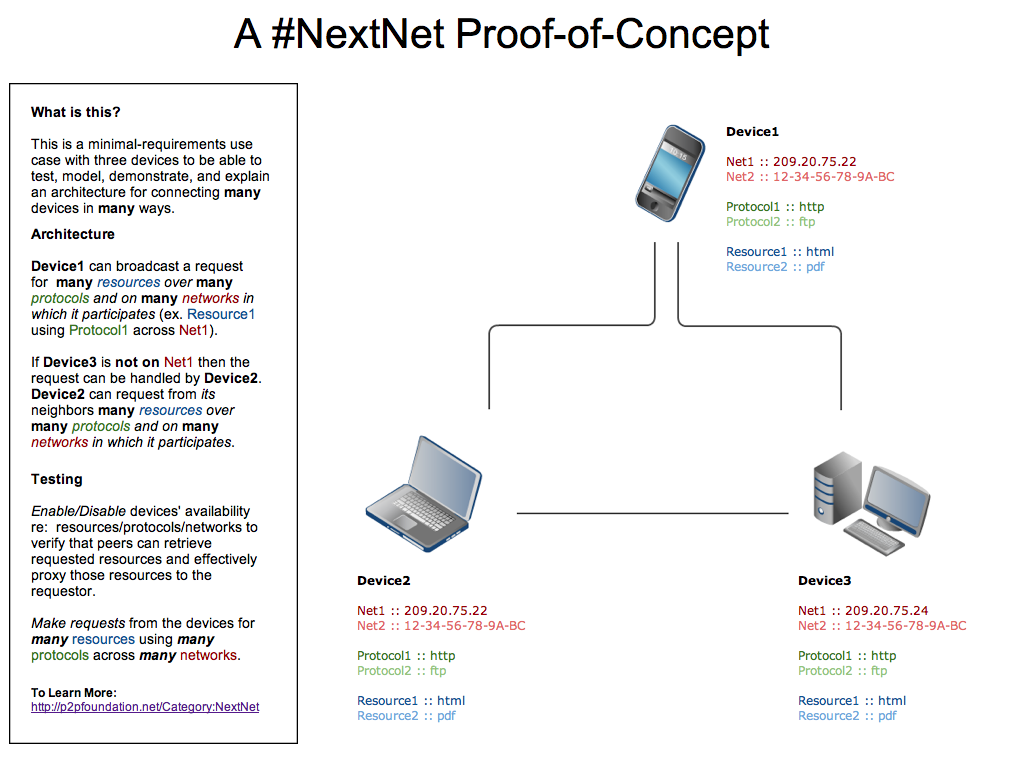
Within the past week, members of the Future Forward Institute have put together a simple diagram of a minimal-requirements test case for experimenting with combinations of networks, protocols and resources. It consists of an initial arrangement of three devices, and can be scaled up to demonstrate how an architecture for connecting many devices in many ways could work.

Continue reading

The Bank of Facebook: Currency, Identity, Reputation

Tags

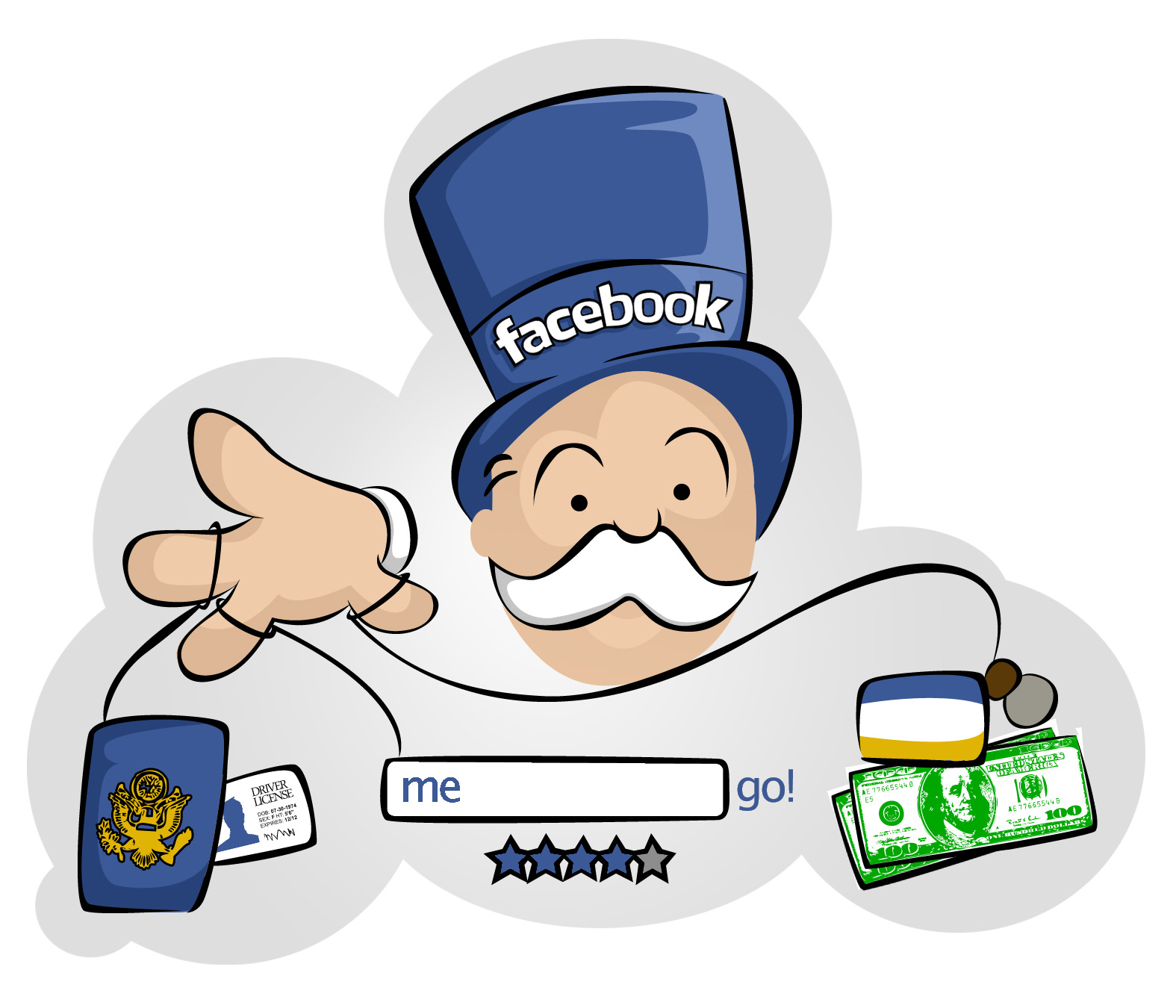
design by ericaglasier.com - @EricaGlasier

How will Facebook and the global economy interact in the future?

There has been much speculation recently about the role Facebook Credits could play in becoming a global virtual currency, and even the possibility of Facebook becoming a bank. In many ways, it already is becoming a bank – just not in the traditional sense. Facebook is harnessing the power of the social graph, and has certainly adopted an expanded definition of what ‘currency’ means. It’s time for the rest of us to hop on board.

As I’ve been conducting research for The Future of Facebook Project, the experts and thought  leaders interviewed shared some compelling views about the evolution of virtual currencies, and Facebook’s potential role in their development. A big takeaway is that while we typically associate currency directly with money, the rise of the social web and quantification is shifting that reality to become more inclusive of kinds of capital that were formerly intangible.

Money is a tool we use for arms-length transactions, where there isn’t an assumption of any kind of relationship or trust between parties. But as data is being mapped at an accelerating rate – from self-quantifiation, to the contextual and relational data about our location and interactions, to our preferences and opinions, to our exchanges and transactions – we are being granted access to a much richer base of information in our decision-making toolkit. Continue reading

Could Affiliate Crowdfunding Be an Alternate Model for Online Advertising?

Tags

The other day, I noticed that fundraising platform Kickstarter introduced ‘Curated Pages,’ a way for arts and cultural institutions to feature projects they like on the site. As you know, we’re doing our Future of Facebook Project on Kickstarter, and the ability to showcase other projects you think are cool is a neat feature.

The timing this feature rollout was interesting to me, because I had just been thinking it would be fun to be able to be able to highlight projects that resonate with me on my own website. And perhaps receive a small percentage for every transaction that occurred via my site.

Affiliate programs of all stripes exist around the web – I see them a lot for ebooks (zenhabits offers 50% commission to sell his digital products), and then there’s the Amazon Associates program, which lets you earn up to 15% in referrals if you advertise their products.

But here’s an idea I haven’t seen yet – affiliate crowdfunding.

But what if you could support the fundraising efforts for creative projects and initiatives for social good by posting a widget to your site, and earn a small percentage when a donation was made?

Of course, most crowdfunding platforms currently charge between 8 – 10% to use their service already. Kickstarter, for example, charges a 5% fee, plus it passes on the transaction fees charges by Amazon Payments, their payment service of choice. So tacking on an affiliate fee onto that structure may not make sense for the individual or group trying to raise funds. On the other hand, some would argue that every little bit helps.

What would be interesting is a platform that doesn’t automatically charge that 5% flat fee, combined with a transaction platform that doesn’t gouge you for another 3-5%.

I took a look around, and there actually are a few examples of crowdfunding platforms that take no fees. One is Beex.org, an open source challenge based fundraising platform created in PHP/MySQL by a nonprofit, the Sarapis Foundation. They charge no fees for transactions, and the tool works with Paypal. Another service that takes no fees is Kapipal.

I wonder if a service like Beex.org could be modified to allow a user to enter in a % they would take for promoting a crowdfunding campaign on their site. To keep things from getting exploitative, that % would have to be transparent to the public, and would be based on an agreement made by the fundraisers and the affiliate. Then combine that with a payment service, either online or mobile, that charges a very small fee for transactions.

I can think of a lot of projects I would love to see get off the ground – from open source projects to sustainability initiatives to social enterprise and business ideas – all things I believe in. This would be a mechanism that would help get those things funded, while also supporting an affiliate’s effort to promote them. On a larger scale, it would be cool to see this kind of thing appear on huge sites with massive traffic.

Perhaps it would create a category of advertising that directs people’s attention (and microdonations!) in a socially useful way, verse just encouraging people to consume more stuff. 🙂

10 Projects Moving Us Towards a Superfluid Economy

Tags

Over the upcoming months leading up to the Contact Summit in October, I’ll be highlighting various projects and initiatives working to construct a globally networked society. As humanity and technology co-evolve into higher orders of complexity, it can be said that social media is now facilitating the emergence of new forms of culture, commerce, and governance. We want to bring attention to the great and liberating stuff that’s happening, and encourage connections, conversation, and collaboration.

The past few weeks have been focused on technology infrastructure, starting with the Towards A Distributed Internet post and the resource list of mesh networks, and continuing on with the formation of a Next Net google group that’s thriving with over 90 members already!

We’ll continue to circle back and revisit conversations and progress, but for now I’ll move on to another hot topic: money and value exchange.

What is the future of money? And not just money, but currencies in general – from virtual currencies to timebanks to social currencies based around trust, identity, reputation, expertise and relationships. And not just currencies, a.k.a. tools that are supposed to represent a unit of measurement in order to transact, but also value exchange in general and the social behaviors that precede them.

So we’re really talking about The Superfluid Economy, the set of tools and behaviors that are developing to make economic exchange, transactions, payments, commerce, distributed collaboration, resource allocation, and social enterprise formation as frictionless and fluid as possible.

To kick off the conversation, I pulled up 10 projects that are innovating in this space which are either developing new products and services, or raising awareness through art and media. We’re excited to know that some of the initiatives below will be represented at Contact!

1. The Metacurrency Project


“We will not have an equitable nor a healthy economy in an information age, until we have information technology which empowers us equitably — that is decentralized, peer-to-peer and operates by mutual agreement.”

This project gives a broad definition of currency as “a formal system used to shape, enable or measure currents.” Beyond money, they describe currency as a form of social DNA which shapes flows of attention, trust, participation and value. They seek to build the technology platforms and protocols that would allow people to transact directly with each other with no segment of that interaction relying on a centrally controlled system.

Here’s a nice prezi they created to create a framework for this thinking: Continue reading

Announcing: Contact Summit Oct 20 in NYC

Tags

“Social media has come to be understood as little more than a marketing opportunity. However, we see it as quite possibly the catalyst for the next stage of human evolution and, at the very least, a way to restore bottom-up participation, p2p value exchange and decentralized innovation to the realms of culture, commerce and government.” – Douglas Rushkoff Continue reading

What is the Biggest Threat to Facebook?

Tags

As part of The Future of Facebook Project, we’ve been tapping the wisdom of crowds to explore the opportunities and pitfalls for this company and its userbase. We asked the experts 15 questions, and have posted those same questions for the public to answer on Quora.

A few days ago I posted some answers that were given for the question “What are some key issues that could impact the future of Facebook?” Today’s post is on ‘the biggest threat.’

Feel free to post your response here in the comments or on Quora at ‘What is the biggest threat to Facebook?’ We’ll be keeping tabs on the most provocative responses, and inviting those folks to be included in our final video series for the project!

The themes that have been arising through the interview process regarding the biggest threat to Facebook have been varied – some said it could be a major privacy breach, others cited user boredom as the main risk as people search for ‘the next big thing,’ while others said the biggest threat to Facebook is Facebook itself.

Here’s a few of the responses you’ve given so far: Continue reading