Transitioning from Rebel to Warrior

Tags

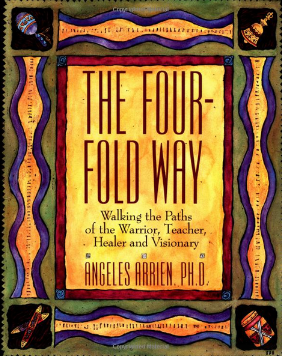
I’m in the process of reading The Four-Fold Way: Walking the Paths of the Warrior, the Teacher, Healer and Visionary, by Angeles Arrien, PhD.  It explores paths to wholeness and empowerment from the perspectives of indigenous societies and shamanic traditions.

In her research, Arrien discovered a pattern of human archetypes that are consistent across cultures, seemingly universally embedded in the mythic structure of societies. When we learn to live these archetypes within ourselves, we can tap into their wisdom and begin to heal ourselves and our fragmented world.

The principles of the Four-Fold Way, based on the four archetypes, are:

1. Show up, or choose to be present. Being present allows us to access the human resources of power, presence, and communication. This is the way of the Warrior.

2. Pay attention to what has heart and meaning. Paying attention opens us to the human resources of love, gratitude, acknowledgment, and validation. This is the way of the Healer.

3. Tell the truth without blame or judgment. Nonjudmental truthfulness maintains our authenticity, and develops our inner vision and intuition. This is the way of the Visionary.

4. Be open to outcome, not attached to outcome. Openness and nonattachment help us recover the human resources of wisdom and objectivity. This is the way of the Teacher. Continue reading

Emerging Leader Labs: A Social Incubator Running on the Gift Economy

Tags

image found via pinterest by smallfly

It’s an idea whose time has come!

Only a little over a month ago, I was sitting at a table with Art Brock & Eric Harris-Braun of the Metacurrency Project, discussing the possibility of launching a new initiative together in the spirit of the “Superhero School” concept many people are currently exploring.

The premise is pretty straightforward: There are plenty of passionate, driven people who want to make cool ideas and projects happen. Access to resources (especially, money) is often a large barrier to actualizing them.  So why not create physical locations that don’t require money as a chief organizing energy source, where enthusiastic entrepreneurs, artists, designers and other creatives can come together and prototype their dreams? Continue reading

Recognized on the SAY 100: Voices the Shape Opinion List!

Tags

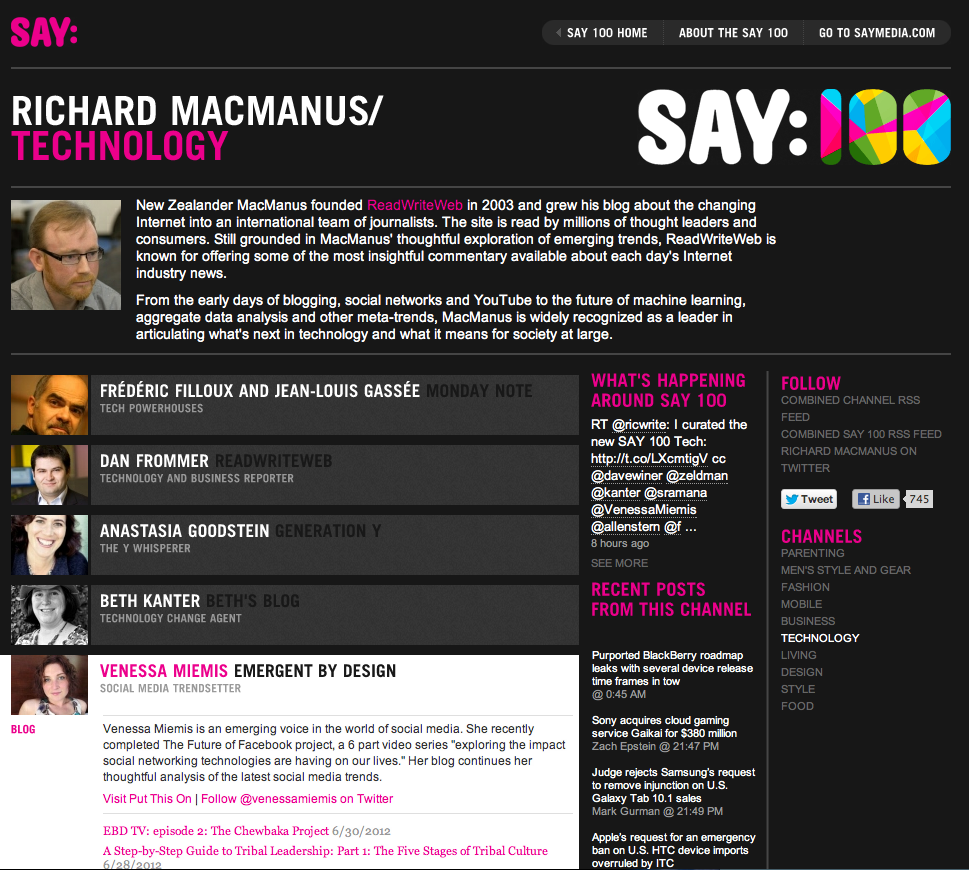
I just saw a tweet go by from Richard MacManus, founder and editor-in-chief of ReadWriteWeb, saying he curated the new SAY 100 Tech list — and was honored to see my name within those 140 characters!

According to the project website, Say Media worked with 10 category experts to identify ‘100 voices that matter’:

The SAY 100 is a collection of authentic and knowledgeable online voices that create engaging content, drive conversation and shape opinion. At SAY Media we believe the power to shape opinion is shifting from the faceless editorial voice of mainstream media to individuals, many of whom are taking advantage of simple technology to create their own properties and build their own media brands.

Thank you, Richard, for thinking of me!

The Chewbaka Project

Tags


I like to talk a lot about building social fabric, relationships and trust. Now I’ll be directly experiencing it, with the “Chewbaka Project.”

Turns out my 80 year old grandmother needs fulltime care, and will be moving in with me now.

Here’s my chance to really flex my creative muscles, and figure out how continue to build the foundations of my career and life while dealing with this new challenge.

I’m determined to continue spreading the messages of a new cooperative economy and world, to educate and inform others of the tools and resources available to us, and to be inspired to keep bringing forth more love and light.

And I might be asking for some help. 🙂

Onward

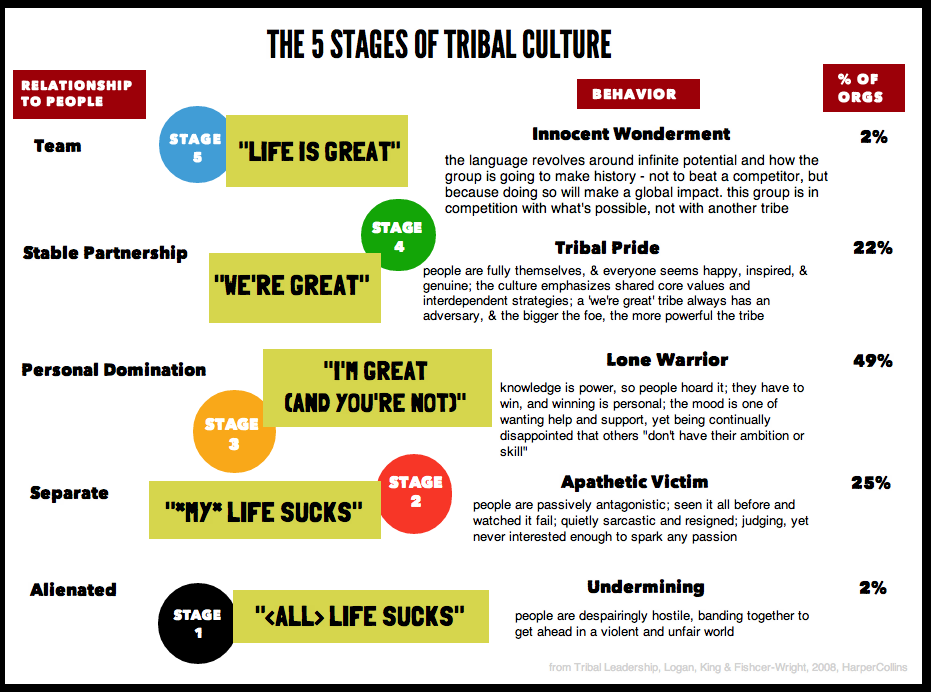
A Step-by-Step Guide to Tribal Leadership: Part 1: The Five Stages of Tribal Culture

Tags

,

this is a review of Tribal Leadership. much of the content of this post is taken directly from the book

Birds flock, fish school, people “tribe.”

I just finished reading Tribal Leadership by Dave Logan, an amazing book that teaches how to build a better organization in which the best people want to work and make an impact. The book is based on a 10-year research study with 24,000 people across two dozen organizations from around the world.

A tribe is a group of 20 to 150 people who know one another enough that, if they saw another walking down the street, would stop and say “hello.”

What makes the tribe more effective than others is its culture.

Culture is a product of the language people use (words create reality), and the behaviors that accompany those words. The words we use to describe ourselves, our work, and others, creates the world we live in.

Tribal Leaders are the people who focus their efforts on upgrading the tribal culture. (upgrading the words we use to describe our reality and the behaviors we practice that shape the direction of our lives)

They set the standard of performance in their industries, from productivity and profitability to employee retention, and attract talent. Most of all, they help bring groups to unity by recognizing their ‘tribalness’ – getting people to talk about the things they really care about, coming together around these common causes, and forming missions to make something great happen, and to live in greatness.

The goal of Tribal Leadership is to learn how to get people ‘unstuck’ – from unhelpful language and behaviors, so we can level up and transition into higher-performance, less stressful, and more fun states of Being. Continue reading

How do we trust each other without proof?

Tags

found on pinterest via Fairy Dust

I was over on Seb Paquet’s Emergent Cities blog this morning, and rereading his inaugural post from about a year ago – What are Emergent Cities? He makes the claim that “we’re about to see the emergence of a new way of conducting innovation that operates quasi-independently of the current money system,” and that the chief requirements to make this happen are things like “time, imagination, knowledge, initiative and trust, with money moving from primary to secondary concern.”

The whole post is worth reading, as I think he really nailed many of the elements that need to be in place for a new economy to emerge, namely the “social DNA” piece. (where ‘social DNA’ forms the foundation for culture)

The barriers to the “new economy” aren’t so much technology hurdles, they’re mental, emotional, and behavioral ones. (highly shaped and constructed via LANGUAGE. more on this in upcoming posts.)

We discussed the concept of “culture technology” a few weeks ago, and this is exactly it. Continue reading

Agile CultureCon 2012: Call for Speakers! Let’s Hack Culture!

Tags

found on pinterest via 1000 cultural

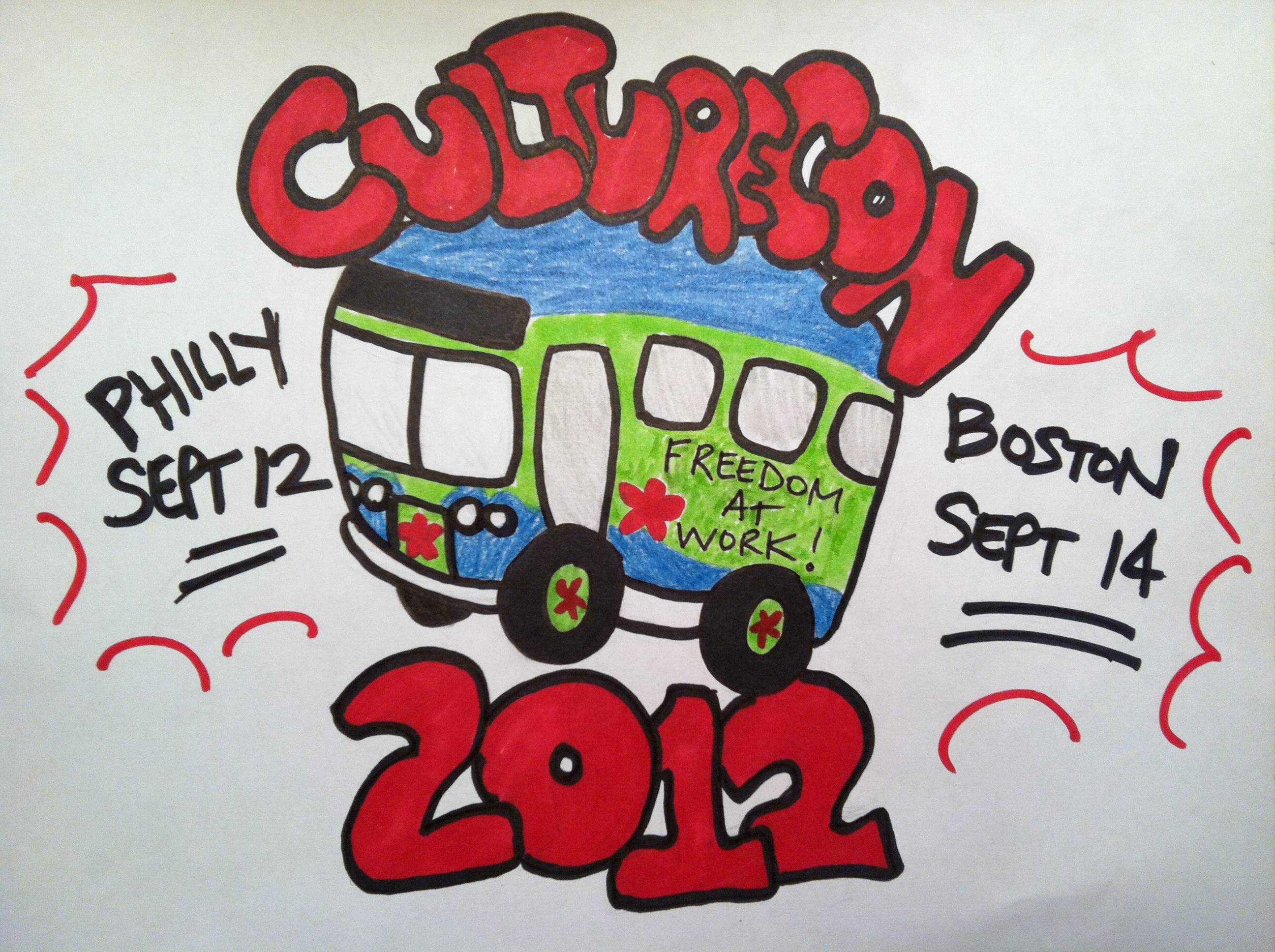
A few days ago I posted about CultureCon (Philly 9/12 and Boston 9/14), an upcoming event hosted by Agile Boston that’s focused on culture analysis, design and implementation in the workplace. The objective of the conference is to “bring to more popular awareness how culture is the gating factor in satisfaction, productivity and learning at work.” Continue reading

What shall we call the thing that comes after conferences?

Tags

just a mini mindgrape this afternoon…

We’re tired of attending conferences and being talked at, when just about anyone in the audience could themselves be a speaker.

Unconferences are nicer, because we can all self-organize and make the event our own.

But there’s a next stage we’re ready for.

We want something action-oriented, and by this I don’t mean something where we create a plan of action.

It’s more about embodiment.

We want embodied experiences.

We want embodied action. Continue reading

Building the Future of Work and Culture: Announcing CultureCon 2012!

Tags

my doodle!

I’ve been a solo artist working independently for several years now, occasionally teaming up with others around events or short-term media projects. Lately though, I’ve become less interested in just doing one-off collaborations. For one, it gets lonely, and secondly, I’m unable to take on the scale of projects I want to work on all by myself.

I want to be part of a tribe — a creative community of like-minds with whom I can learn, grow, and deliver awesome value to the world, together.

This tribe has a certain kind of culture, based in clearly defined shared values that we not only agree upon conceptually, but live and demonstrate through our way of being.

Here are a few characteristics of this tribal culture: Continue reading