Future of Facebook survey results

Tags

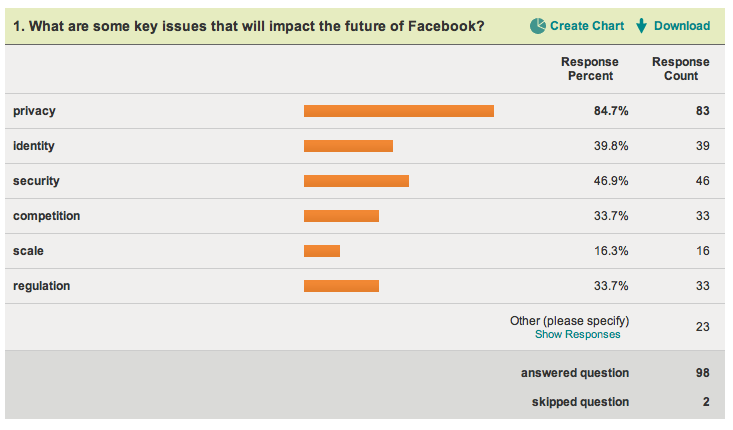
Thanks to everyone who participated and responded to the 4 question survey for the Future of Facebook Project. Below are your results! We’ll be integrating these responses with the ones given by the experts for our final video and written report.

In the ‘other’ category, responses included: personal data ownership, trustworthiness/transparency, boredom/fatigue. Continue reading

Mapping the Identity Management Landscape: 29 Providers

Tags

I’m just beginning to dive into a new research area around Identity and Access Management (IAM) in the enterprise, and am brushing up on the main challenges, opportunities and contenders in the space.The premise around IAM seems simple enough – make sure people are who they say they are, and give them access to the appropriate data and services they need.This area is particularly interesting to me because I see the future of work and collaboration generally becoming a more non-hierarchical, self-organizing and fluid thing, where ad-hoc relationships are formed for temporary projects and then dissolved. Individuals will need to quickly be authenticated, assigned roles, given access to sensitive information, monitored, and then deprovisioned. Ideally, the majority of this process would be automated.For the individual in this scenario, who would most likely be logging in to a multitude of web-based applications and accounts across a range of personal devices, a federated identity solution would be in order.And all of this would also require security, compliance and trust solutions for the cloud, standards such as SAML and OAuth to accelerate integration, as well as standards for auditing and reporting.

These seem to essentially be the main challenges being faced now in the enterprise, so I’m curious to find out how providers stack up. Continue reading

Survey: 4 Questions for the Future of Facebook

Tags

As we continue to roll out the Future of Facebook video series, I thought it might be nice to supplement it with a report. So, I’m excited to say I’ve teamed up with John Smart, president of the Acceleration Studies Foundation, who is fleshing out a great overview of key trends, issues, and recommendations for Facebook’s future.

Part of the ‘open foresight‘ aspect of this project has been pulling in thoughts and opinions from the public as well as the experts. Though we have a series of questions available to be answered on Quora, we decided to put together a separate short 4 question survey with some of the juiciest questions for you to gnaw on, which will be integrated into the final report.

So, if you have a few minutes to share your thoughts on biggest threats, the “next big thing,” and what you’d do if YOU were at the helm of the Facebook ship – please help us out!

Click here to take the Future of Facebook Survey.

Thank you!

10 Projects to Liberate the Web

Tags

(originally posted on Shareable)

In the last nine months of planning the Contact Summit, I’ve come across a range of projects and initiatives building toward the “Next Net.” Though they vary in their stages of development and specific implementations, they fall under the common themes of enabling peer-to-peer communication and exchange, protecting personal freedom and privacy, and giving people more control over their data and identity on the web. Here’s list of just ten projects, many of which will be demoing at our exhibitor space at Contact on October 20th in New York City. Continue reading

How Can Business-to-Business Trade Networks Build Local Resilience?

Tags

Over the past year, I’ve been exploring the many examples out there of communities forming peer-to-peer networks in order to rebuild local economies, resilience and trust. These range from gift economies to barter groups, from loyalty programs to mutual credit systems. The latter, mutual credit systems, is the focus of this post.

The oldest mutual credit system still in operation today (of which I am aware) is the WIR, based in Switzerland, which was created in 1934 due to currency shortages after the stock market crash of 1929. The WIR is managed by the WIR-bank, a cooperative owned by the businesses using it. They currently have about 75,000 Swiss businesses as members, representing about 25% of all businesses in the country.

It’s essentially just a bookkeeping system that enables transactions to happen, and is generated directly among the businesses. So, business A sells a good or service and receives a WIR Credit, while Business B, the buyer, gets a corresponding debit. Business A can go use their Credit elsewhere, while Businesss B has to eventually sell a good or service to offset the debit and remain in good standing with the community of business members. No interest is charged, and the ledger always balanced to zero. It’s been observed over the years that during times of recession, participation in the WIR system increases, meaning the financial needs of businesses continue to be met uninterrupted despite what’s going on in the global economy.

I thought this was a pretty cool thing, both in terms of creating a mechanism for businesses to engage in trade without the use of traditional money, and as a complementary currency that acts as a “spontaneous counter-cyclical shock-absorber for the Swiss economy,” in the words of Bernard Lietaer.

I wondered if there was anything similar going on in the US, and was excited to discover the Vermont Businesses for Social Responsibility Marketplace, an “innovative peer-to-peer mutual credit system embedded within the largest green business association in the US.” Businesses pool the credit they issue to each other into a common marketplace where local goods and services are bought and sold, credit lines are issued to willing entrepreneurs, and the cost of doing business is lowered by consolidating expenses and buying power. They currently have 160 businesses actively trading, with a goal of getting 1000 Vermont businesses as members by 2015.

I reached out to its founder, Amy Kirschner, to find out more about how it works. Continue reading

Contact Summit: How Can Technology Accelerate Social Evolution?

Tags

What is the true potential of a networked planet? How do we use all this great social technology to develop a new operating system for society – one that creates abundance, sustainability, and lasting value? What do we need to do to improve the quality of life for ourselves and our communities?

These are the questions many of us having been asking ourselves as we move through these uncertain times. As more of us embrace the notion that we’re all connected, we find ourselves looking for new ways to realize the greater potential of all these connections. Whether it’s engaging in collaborative consumption, building the commons, using complementary currencies, or taking advantage of open source tools – there’s a visceral sensation that a new infrastructure for ‘how things work’ is under construction.

To celebrate and accelerate this development, we’re holding a summit called Contact in NYC next month. Continue reading

Why the Future of Money Matters (Is the current system obsolete?)

Tags

I just saw an article from the NY Times – Bloomberg, on Radio, Raises Specter of Riots by Jobless– with the NYC mayor hinting that the combination of enormous public debt and high unemployment could lead to rioting, as we’re currently seeing in other parts of the world.As I’m looking at this article, I’m also preparing my ‘future of money’ talk for SIBOSin Toronto next week, where I’ll have just a few minutes to paint a picture for the bankers about where the future may be heading.I’ve been trying to think about how to frame it, because it’s bigger than just talking about banks being disintermediated due to mobile payment platforms and peer to peer technology. There’s a larger discussion to be had about the nature and design of currency itself, its inherent biases towards certain types of behavior, and its impact on living systems. There’s also a story about the human desire to redefine what wealth means and to be empowered to create local economies that are biased towards cooperation and abundance. Continue reading

A global discussion about the future of our species

Tags

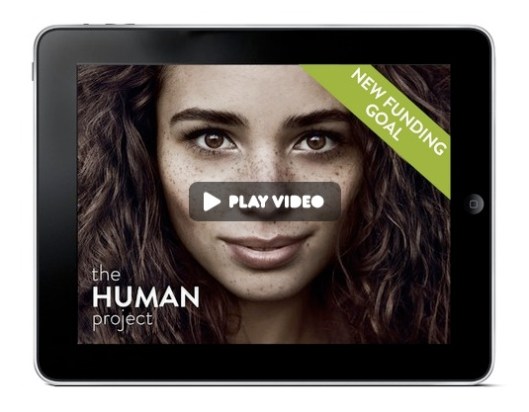
I came across The Human Projecton kickstarter recently, and am very eager to see how it develops. Their mission is to build a global discussion app to ask the really big questions about the future of our species and develop an integrated vision of what that looks like.It seems to be very aligned with my own thinking – that a fresh narrative needs to emerge and a more interconnected “thought architecture” about how we perceive ourselves in relation to each other and the planet. That sentiment and the exploration of how humanity and our technologies are co-evolving have been the driving force behind much of the writing on this blog over the past few years, from my ‘a-ha moment’ about the power of networks, the conceptualization of a tool for intelligent global public discourse, to my current project to develop an ‘Open Foresight’ framework for engaging more people in forward-thinking thought and action.I like that the project founders have announced this as a 40 year project – meaning they’re well aware that making an app doesn’t mean the world is going to change overnight. I’ve found myself frustrated often when I try to even conceive of the idea that any significant portion of humanity could unite around a common vision…. there are so many entrenched ideologies, contexts, agendas, and egos… how could we ever agree?

Might as well get that conversation started now.

I see Us being in the Alignment Phase, and fast approaching the Coordination Phase. As our communication technologies get faster, cheaper, and smaller, more of humanity gets access to each other. As our environments (physical, social, behavioral, psychological) become more quantified, it makes sense to me that we are finding better ways to understand our needs and resources, common goals and aspirations, and then acting with some degree of collective intelligence.

We don’t know what the future holds, but our thoughts and actions now will determine it. I think it’s important to get the dialogue going to discuss the risks and opportunities of a connected global species.

The Human Project has a $50K funding goal in order to be able to build the app for iPad/iPhone/Android + HTML5 optimized versions for web, tablet and mobile. They are less than $9K from that goal, with 12 days to go. If you’d like to back the project, check out their kickstarter page.

Telcos become banks. Facebook next?

Tags

I came across an article yesterday on GigaOm – Dreams of mobile payments lead telco to try banking – notifying us that Rogers, a Canadian mobile carrier, has filed to become a bank.

It makes sense, as we see various iterations of mobile wallets coming into existence, and carriers looking for a new revenue stream. Of course, it’s yet to be seen if ‘ease and convenience’ will be enough of an impetus for consumers to make the switch from the physical medium of paper and plastic to a virtual form that may still seem foreign or less secure.

This does bring me back to a question posed earlier this year about the potential of Facebook becoming a bank. I’m reminded of an interview we conducted for the Future of Facebook Project with JP Rangaswami, the chief scientist at salesforce.com and Venture Partner at Anthemis Group, who said:

“Facebook is the new new telco.  It is the natural logical extension of what telcos were.  I don’t think of it as anything more than taking the concept of what a telephone company used to be and drive it forward.”

He went on to describe what he meant by that, saying that essentially Facebook had brought the 5 basic components of a telco into a 21st century context. These components were:

1. a population of people you put in a directory
2. ways of reducing search costs by grouping people alphabetically/functionally/regionally/etc
3. a number of ways of communicating between people (1-to-1, groups, audio, mail, text)
4. ways to change details associated with those people, via updates to the raw data of what people are doing
5. scheduling

So now you have a ‘social network’ that operates on the basic model of a telco, with the added functionality of mapping and extracting value from the social graph, and building open APIs across a developer platform to expose the graph to other services.

So where does the potential of becoming a bank come in?

As Rangaswami pointed out, we’re making the move to smart mobile devices, and we have the capacity to link the SIM card with one aspect of authentication. We have Facebook Connect. We have near field communication that enables us to transfer virtual value out into the real world. We have virtual currencies that can be implemented across any number of community contexts – local, regional, by industry, etc. And we’re not just talking about Facebook Credits or digitized money, but any number of complementary currencies used by particular groups to enable more frictionless transactions.

Facebook then also has the potential to draw in the unbanked or the underbanked around the world, where the entire infrastructure of having physical money and a place to store it can be leapfrogged in place of a virtual system and marketplace.

I still haven’t really wrapped my head around the big picture… curious to see how it will unfold and how mobile carriers are going to convince consumers they can be trusted as financial institutions.

What does this mean for banks? Do they get disintermediated?

Are Libraries the Hackerspaces of the Future?

Tags

As I was reading through the projects coming to our upcoming Contact Summit in NYC next month, I was inspired by a few people who are reimagining what a library could be.

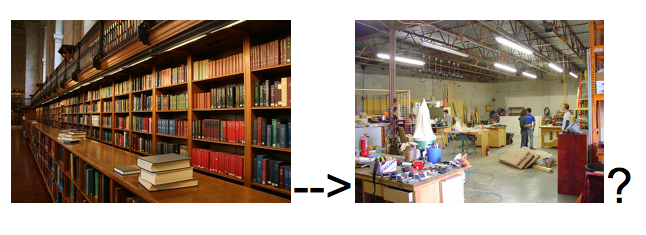
Library Turns Hackerspace

Perhaps you’ve heard the term hackerspace, or something along a similar vein, like makerspace, makerlab, or fab lab. Wikipedia defines it as

“a location where people with common interests, usually in computers, technology, science, or digital or electronic art can meet, socialise and/or collaborate. Hackerspaces can be viewed as open community labs incorporating elements of machine shops, workshops and/or studios where hackers can come together to share resources and knowledge to build and make things.”

I’ve only been to one such place while in Berlin last fall, called Open Design City. It was amazing to watch a beta launch tech event going on in one corner, while the other side of the room kept people busy with textiles, laser cutting, and arduino. After witnessing the growth of general coworking spaces around the world the past few years, this next level of co-production seemed to make sense.

How could we accelerate the rate of such hubs forming, where events, community, and DIY production collide? Where do you put them? Who funds them?

A few librarians in upstate New York have implemented some cool ideas to establish the library as the 21st century innovation lab:

1st Fabrication Lab in a public library

One project I’m excited to hear more about is being spearheaded by Lauren Britton Smedley, who’s working with Syracuse University and the Fayetteville Free Library to create the first Fabrication Lab in a public library. They’re currently in the process of writing grants and securing funding, with the ultimate goal to use technology as a catalyst to nurture and assist community/local innovation. Lauren explained her passion for pursuing this project:

“I believe that in order to realize the greater promise of social media it is necessary that the public understand how social media works, including at a technical level.  I think that by having more people with access to (and understanding of) this  information and technology, we can better promote new forms of culture, commerce, collective action and creativity. The public library is the perfect institution to connect these ideas with the public!”

LibraryFarm

The other project, LibraryFarm, is a collective farm on ½ acre of public land run on the model of a public library. Anyone can “check out” a plot of land for no cost, plant what you want, and do what you want with your harvest. The idea is to promote “food literacy,” and rediscover the knowledge and empowerment that comes with learning how to grow food. This project is being led by Meg Backus and Thomas Gokey, who taught the “Innovation in Public Libraries” grad seminar at Syracuse University that also led to the above fabrication lab project.

I love that these pioneers have rolled up their sleeves and are demonstrating their vision for the 21st century library – not just a room full of dusty books, but a continuous learning center that utilizes technology and information to help communities thrive and businesses grow!

Check out some of the other amazing initiatives that will be joining us at next month’s event.

It’s not too late to register – hope to see you there!